
Shamanism is humanity's oldest form of spirituality. Practised since the dawn of time across the globe, it embodies a sacred connection between human beings and Nature. Today, this ancestral wisdom is experiencing a real revival, responding to our quest for meaning and harmony.
Who are shamans ?
The term « shaman» originates from the Tungusic word «Şaman», a Siberian word popularised by Western anthropologists. Depending on the culture, these guardians of tradition have different names: Curandero in Mexico and Latin America, Pajé in the Amazon, Marakame among the Huichols, Mudang in Korea, Wicasa Wakan among Native American peoples, and Déo Celtes in Europe.
Medicine men and women, healers and visionaries, shamans serve as a bridge between the visible and invisible worlds. Present on every continent, they develop a particular attention to the signs of the Universe and cultivate a balance between their feminine and masculine sides.
The role of shamans
Restoring balance, both in individuals and in the community, by drawing on the mysterious forces of Nature.
Becoming a shaman cannot be improvised! The shamanic path requires several years of learning, passing through initiation trials, a profound inner transformation, purification processes and mastery of the ego.
This long journey allows one to acquire the maturity necessary to serve with joy, humility and wisdom.
Growing recognition
After centuries of marginalisation, shamanic practices are experiencing a revival and renewed interest in Mongolia, South Korea, and among the indigenous peoples of North America, Latin America, the Amazon, Africa and Australia.
[nbsp]
A universal message
Beyond rituals, shamanism teaches us respect for life and gratitude towards Mother Earth. It reminds us that we are not separate from Nature, but deeply connected to it. In a world facing ecological and spiritual crisis, this ancient wisdom could well be one of the keys to our future.
About
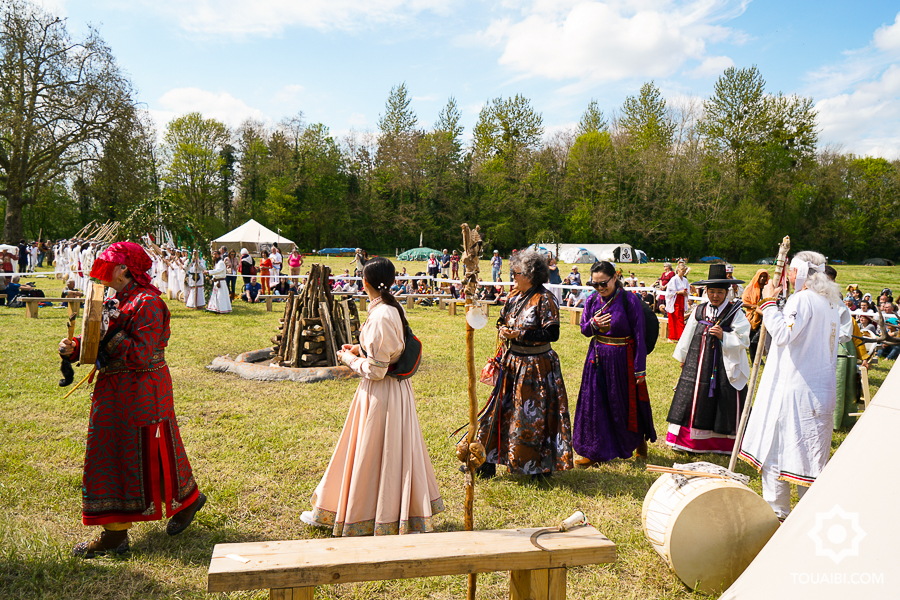
Crossing the sacred circle. Grandmother Chinggis Ayangat (Mongolia) and her delegation, followed by Sung-Mi Park (South Korea), during the opening ceremony of the 13th Festival of Shamanic Traditions at Septvallons, near Reims.
About
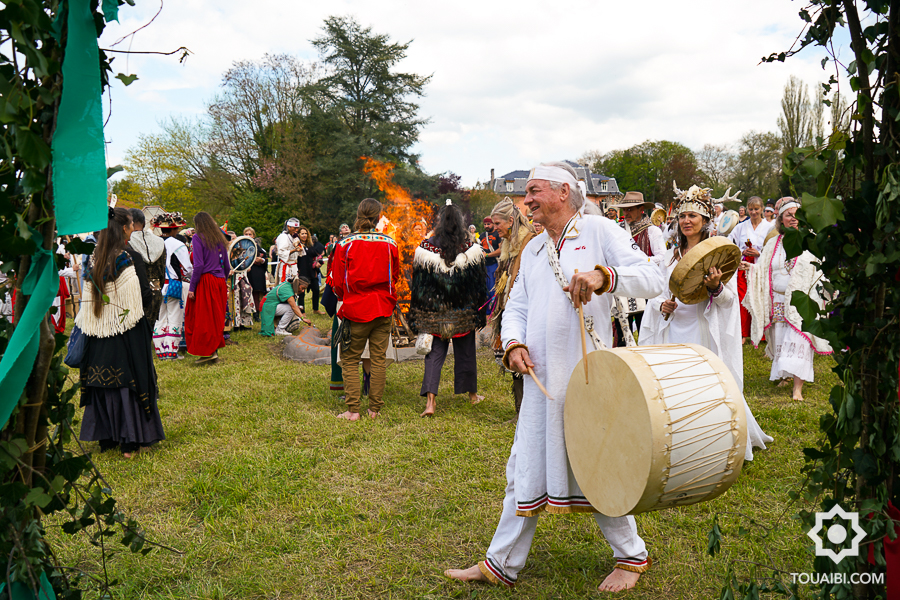
Carried by the rhythm he holds in his hands, Patrick Dacquay crosses the sacred circle. It was following a profound dream that he founded the Circle of Wisdom and the Shamanic Festival, which will celebrate its 13th edition in France in 2023.
About
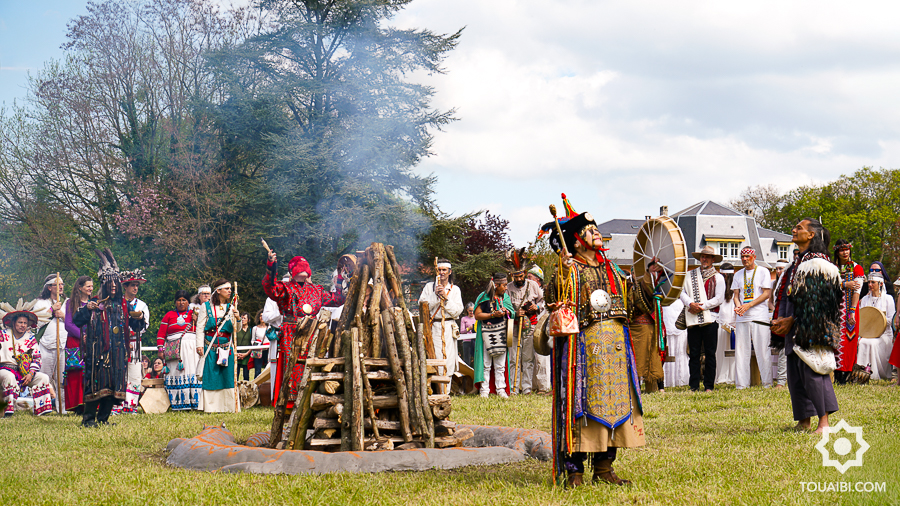
Opening ceremony of the 13th Shamanism Festival. In this collective breath, time stands still and gives way to a space for meeting, sharing and opening up to invisible worlds.
About
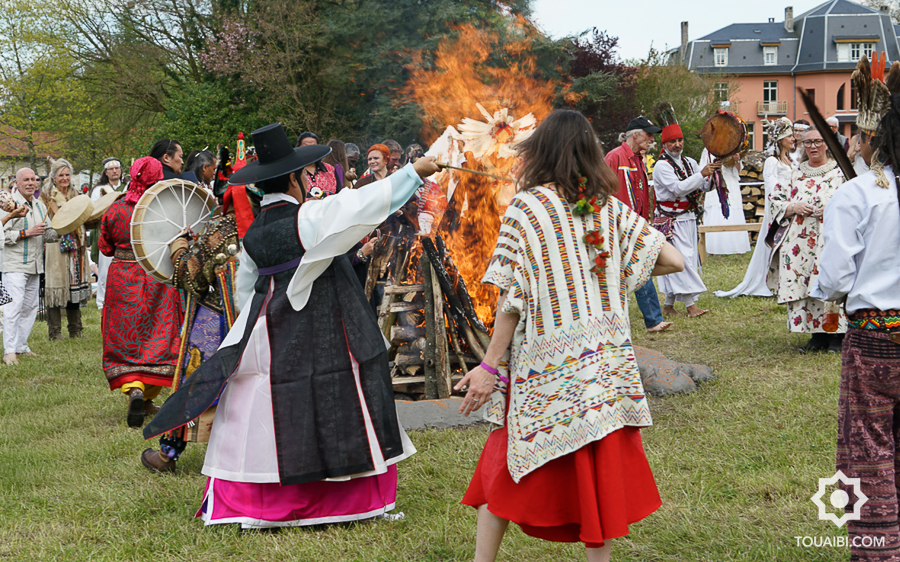
During the opening ceremony of the 13th Festival, Sung-Mi Park (South Korea) blesses the Central Fire, lit moments earlier by the Fire Keepers as a symbolic axis between Earth and Sky.
About
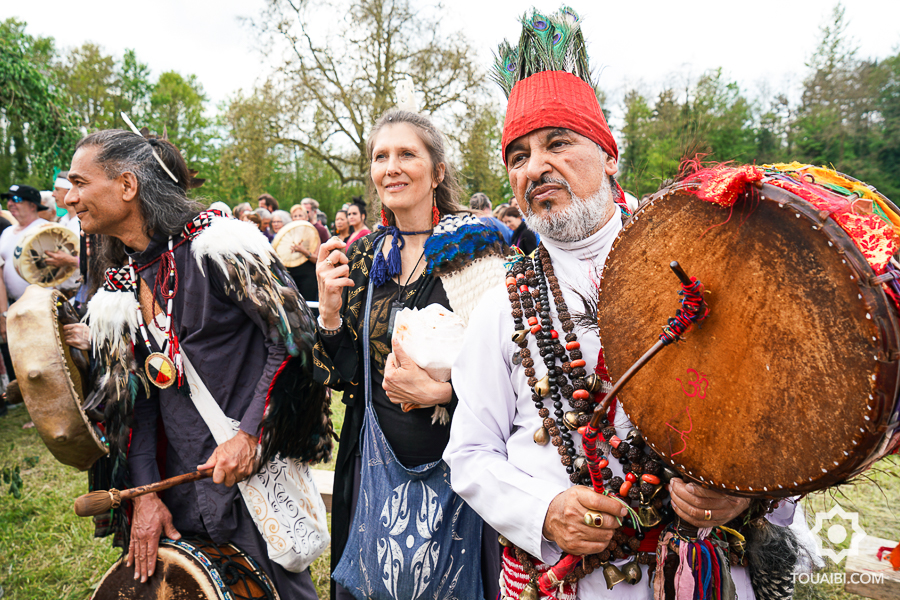
Ojaswin and Waimaania Kingi Davis, guardians of the Maori tradition of New Zealand, alongside Bhola Nath Banstola, Jhankri shaman of Nepal. A meeting of spiritual lineages between the Pacific Islands and the foothills of the Himalayas.
About
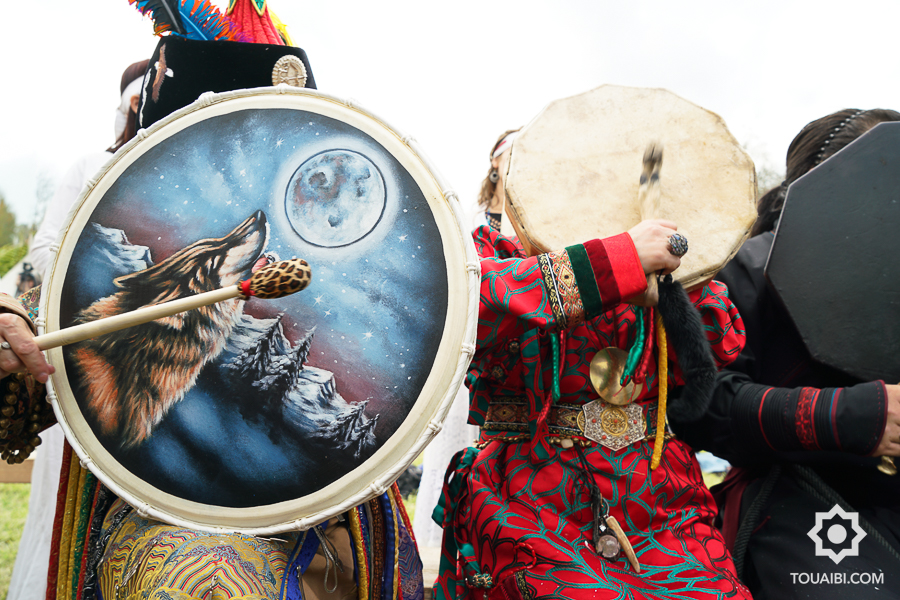
In Mongolia, female shamans play a major spiritual and social role. They are often recognised as healers, perpetuating ancestral traditions within their communities.
About
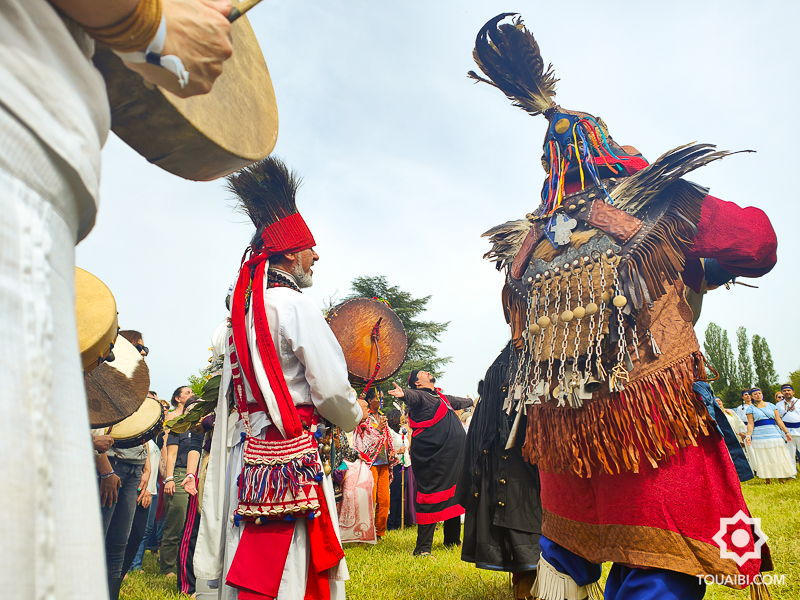
The sound of the drum: for the shaman, its steady beat opens a door to the invisible. In this passage, the human heart and the vibration of the earth resonate together.
About
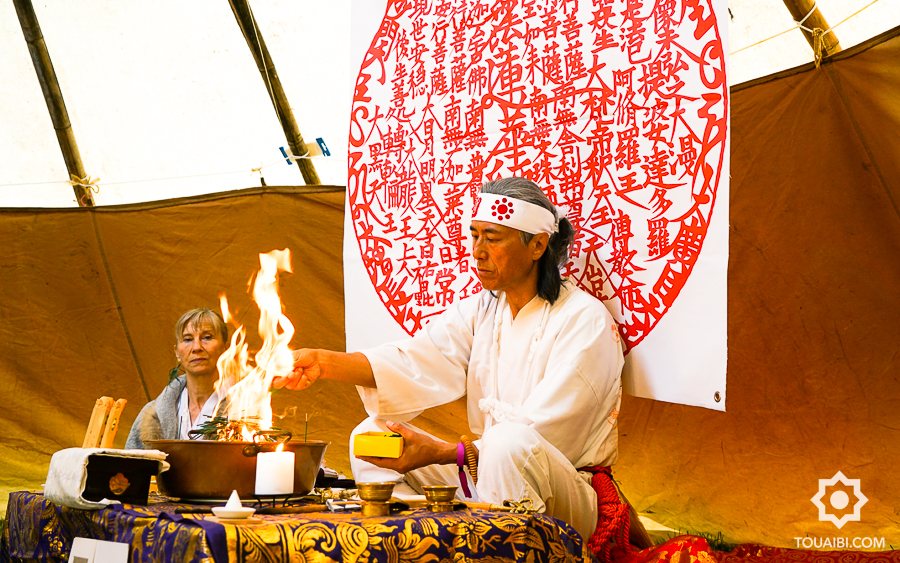
Kazuhisa Ogawa, practising Shugendo. In this ritual of purification of places and people, he embodies the dual path of the Japanese spiritual warrior: both Samurai, through the rigour and discipline of his movements, and Ninja, through his knowledge of energies and the invisible.
About
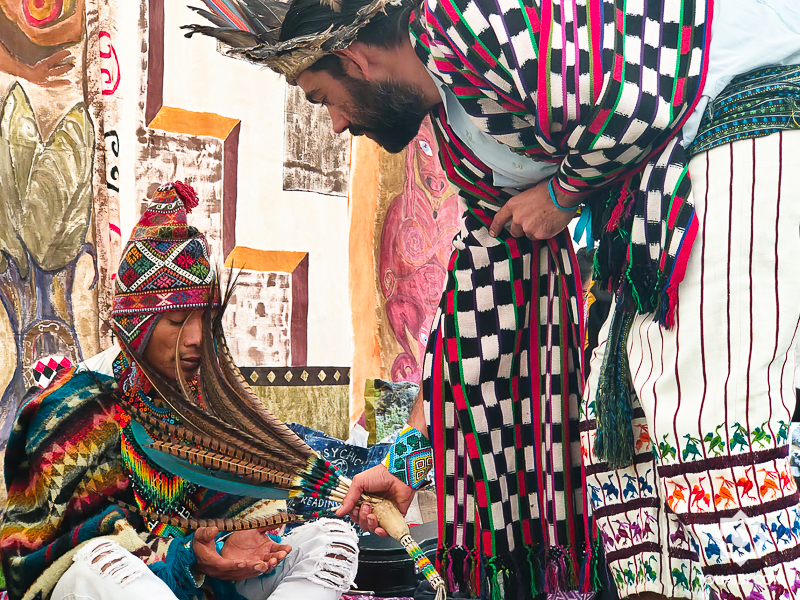
Pedro de Las Rosas, Medicine Man from Venezuela, and Shane from the Huni Kuni People of Brazil during a ceremony.
About
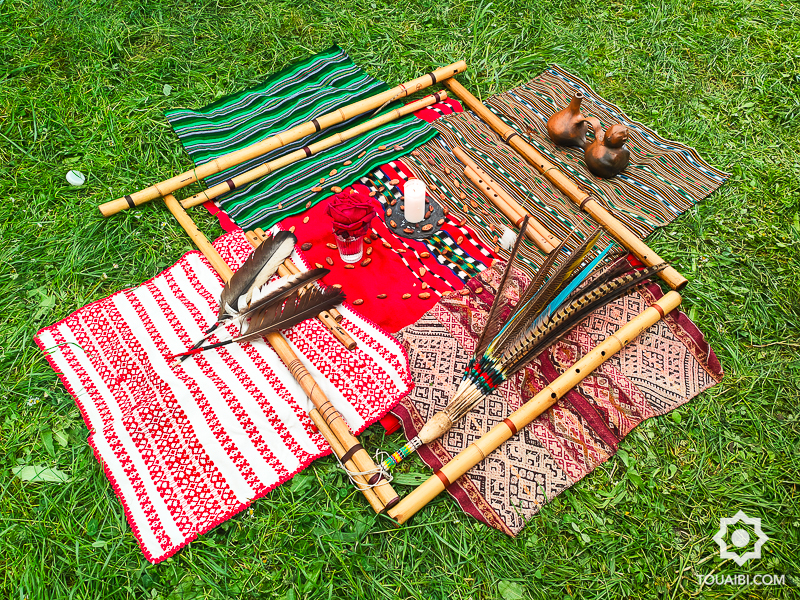
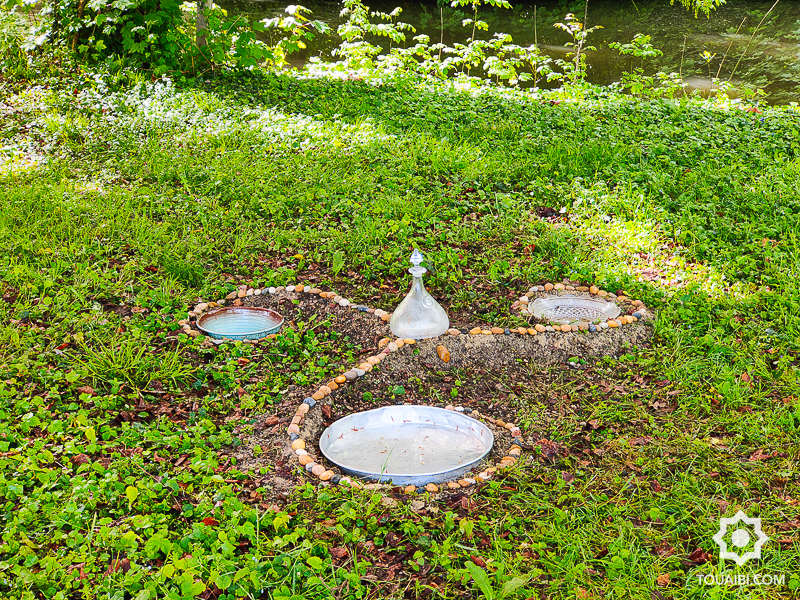
During the Rose Ceremony with Pedro de Las Rosas, the centrepieces of the ritual. Each represents and honours an element of Nature — Earth, Water, Fire, Air — invoking their presence and sacred balance.
About
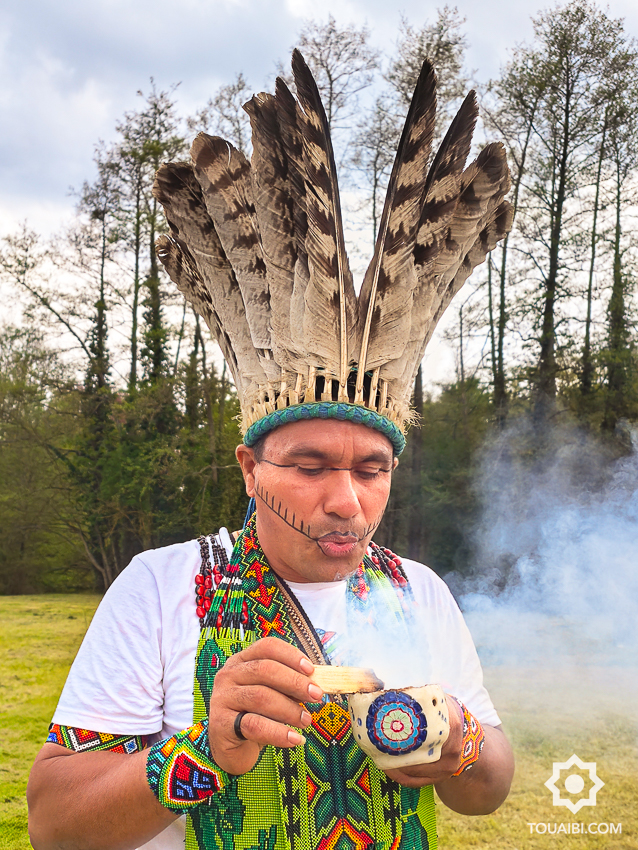
Puwe Puyanawa, a leading figure and guardian of the traditions of the Puyanawa people (Brazilian Amazon). As a prominent leader of his community, he works with them to preserve and pass on their indigenous culture, which has become a model for others to follow.
About
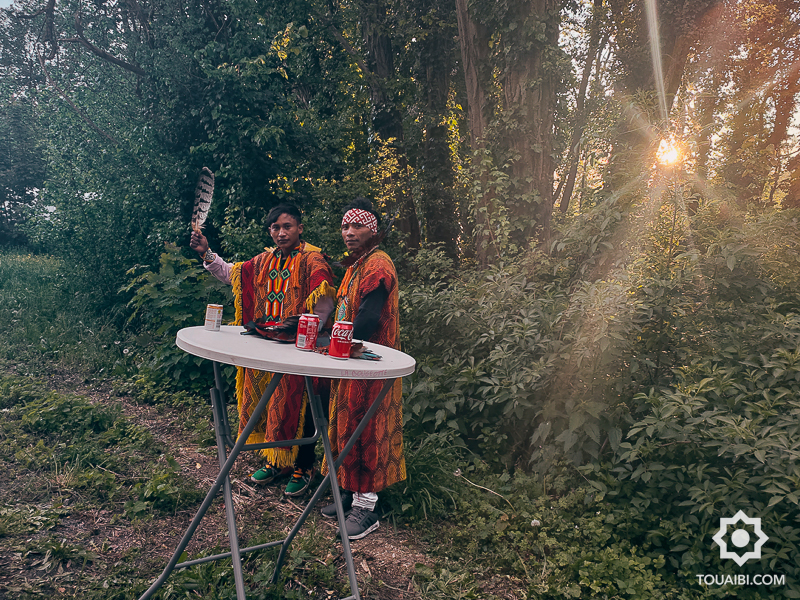
Shane and Yube Pai da Mata embody the new generation of guardians of the ancestral culture of the Huni Kuin, an indigenous people of the Amazon rainforest (Brazil/Peru). Their presence affirms the vitality of a profound spiritual heritage, preserved through sacred songs, medicinal plants and the teachings of their ancestors.
About
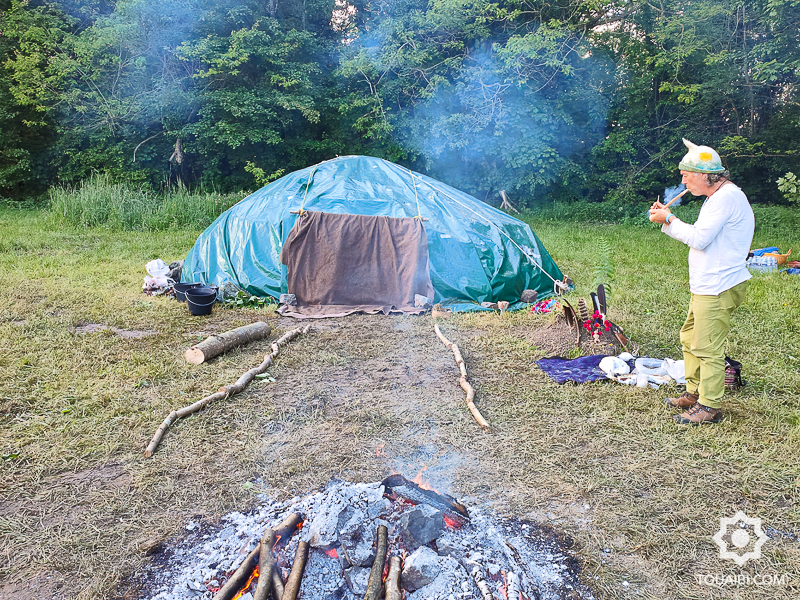
Marc Leblet, initiated into Celtic shamanism and wood craftsman. In front of the sweat lodge, he smokes one of his pipes. The smoke — from his creation and from the sacred fire — rises and aligns.
About
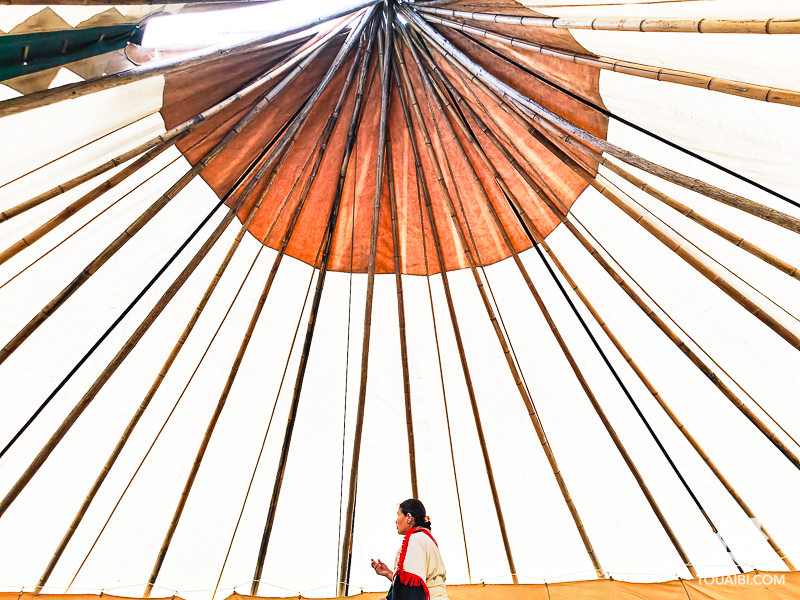
Cheryl Angel, recognised by her Lakota community as the bearer of the spirit of water. A discreet figure in front of the immense canvas of the Elders' Tipi, a space where she performs a ceremony for the balance of the planet.
About
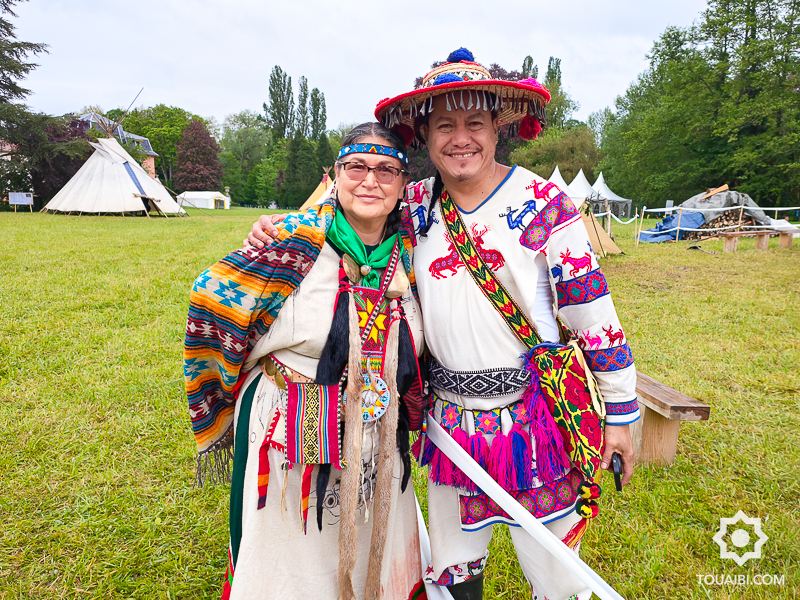
Cheryl Angel, Waterkeeper and Lakota Grandmother, and Matza Tlaloc, Curandero with indigenous Mexican roots. Dressed in their ceremonial robes, their meeting embodies, in all its beauty, the dialogue between ancestral knowledge.
About
The Triskel, an ancient Celtic symbol. Its three intertwined spirals evoke eternal cycles – of life, time, the elements – and the dynamic harmony that results from them. A representation of the perpetual motion of existence.
About
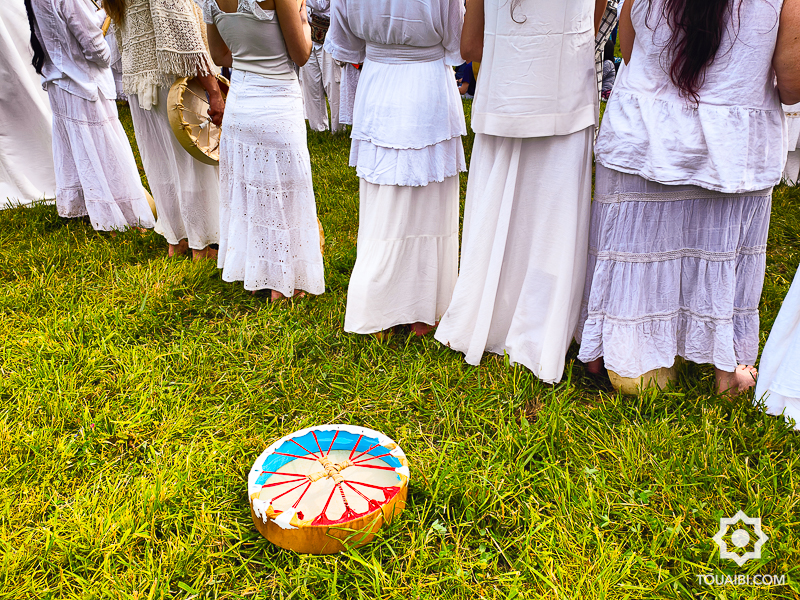
Many women are reclaiming ancestral wisdom: Celtic shamanism, the spiritual tradition of the ancient peoples of Europe. Their approach is an act of living memory and reconnection with the land of their origins.
About
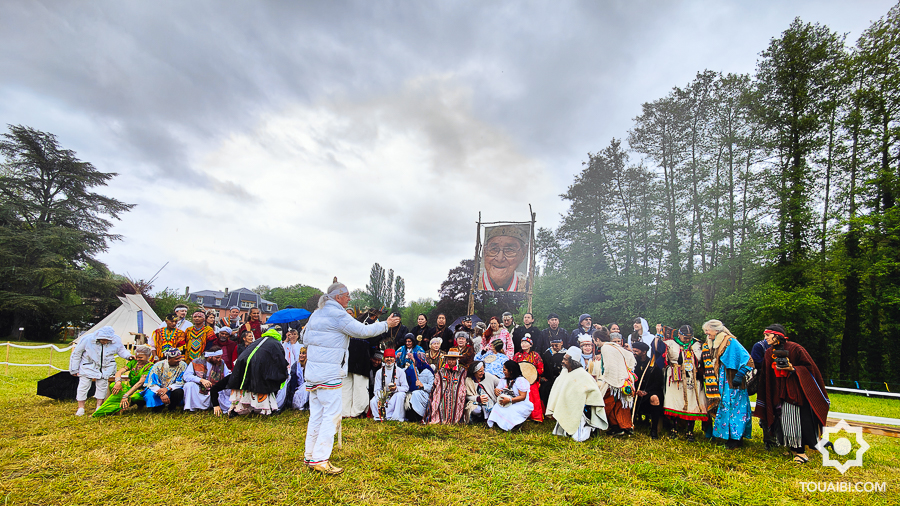
Patrick Dacquay, organiser of the Shamanic Festival and traditional leader of the Circle of Wisdom, composes the final photo. This group portrait is a living, harmonious archive of this gathering of shamans from five continents.
About
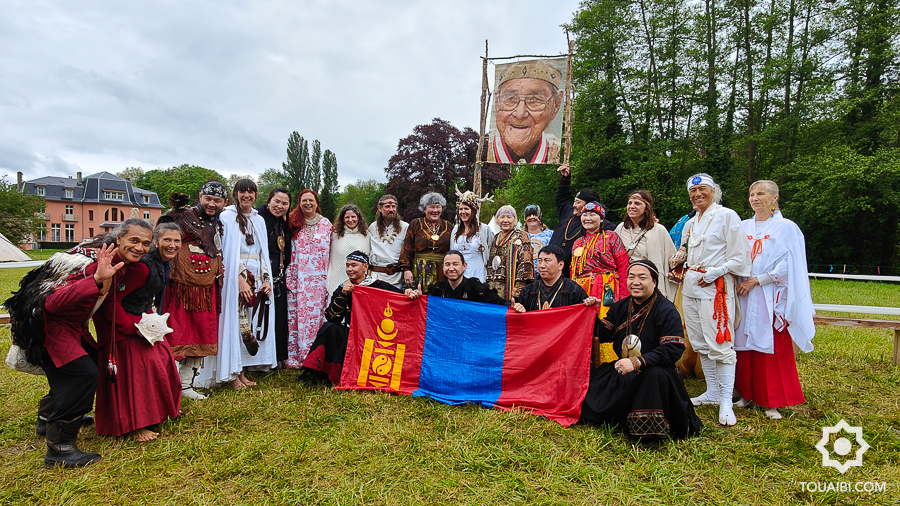
With the delegation of shamans from Mongolia, where tradition is alive and well. Within them lives the memory of a land that has always conversed with the spirits of the sky, the mountains and the ancestors.
About
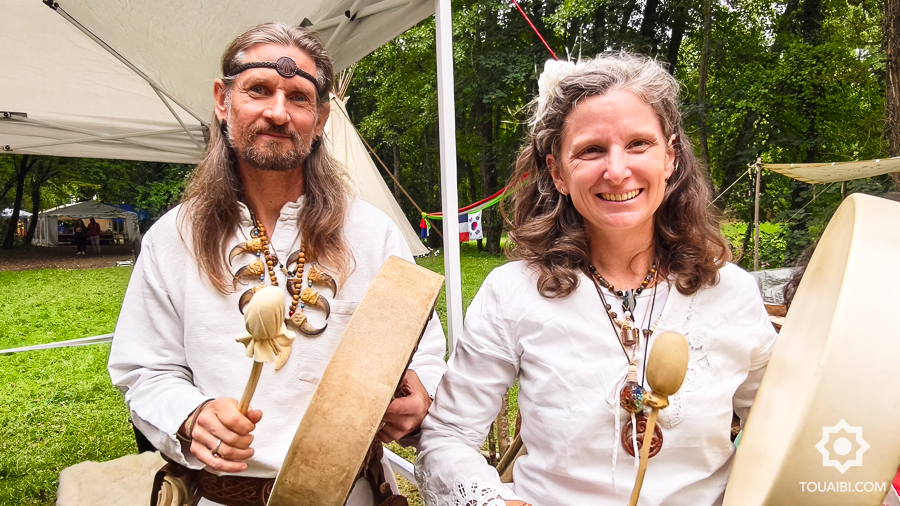
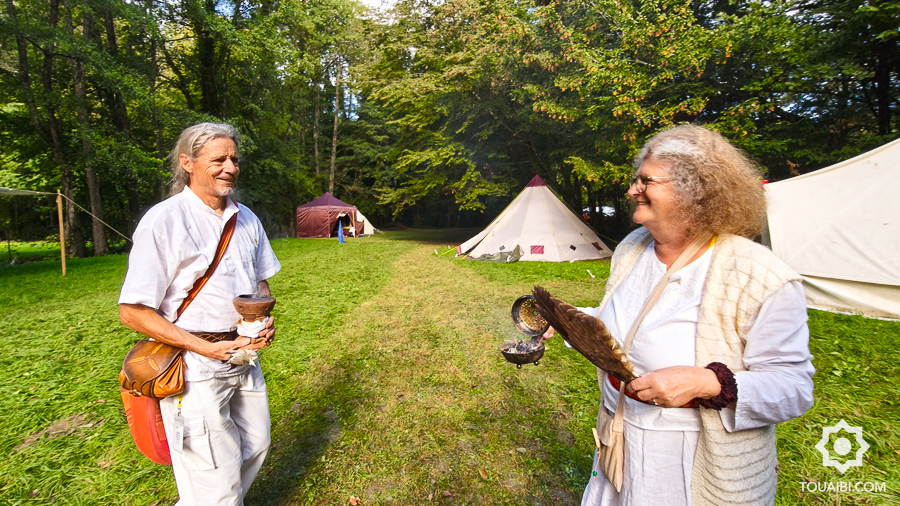
Frédéric and Violaine Roure, guardians of the sacred fire at festivals. He is a Celtic medicine man connected to the spirits of nature; she is a doula. Together, they founded TerrAlliance in Switzerland, a space offering treatments, workshops and ceremonies to reconnect with the sacred and ancestral Celtic wisdom.
About
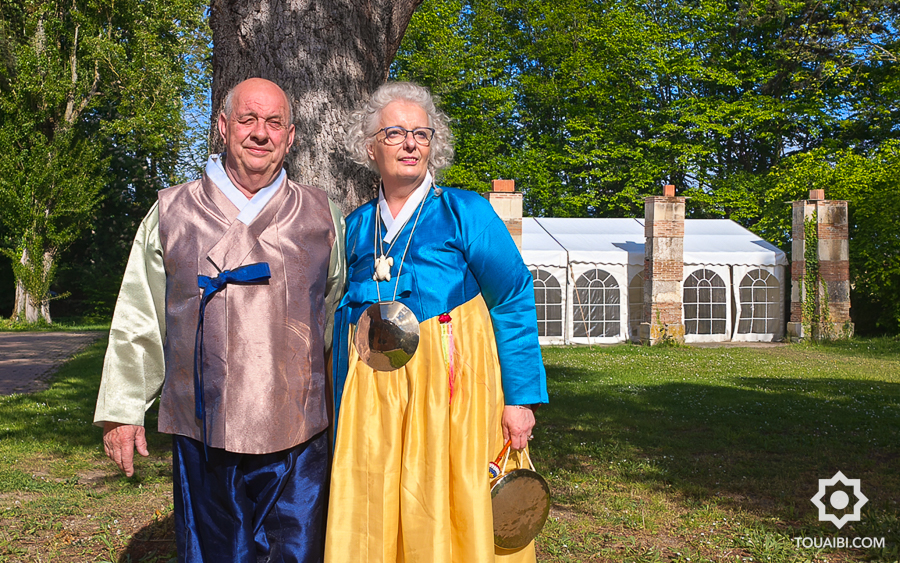
Jean-Marie Grezet, Celtic healer. Initiated into the practices of « healing and bone setting » and Celtic shamanism. Christiane has been walking alongside him for many years, accompanying and supporting him on this shared Celtic path.
About
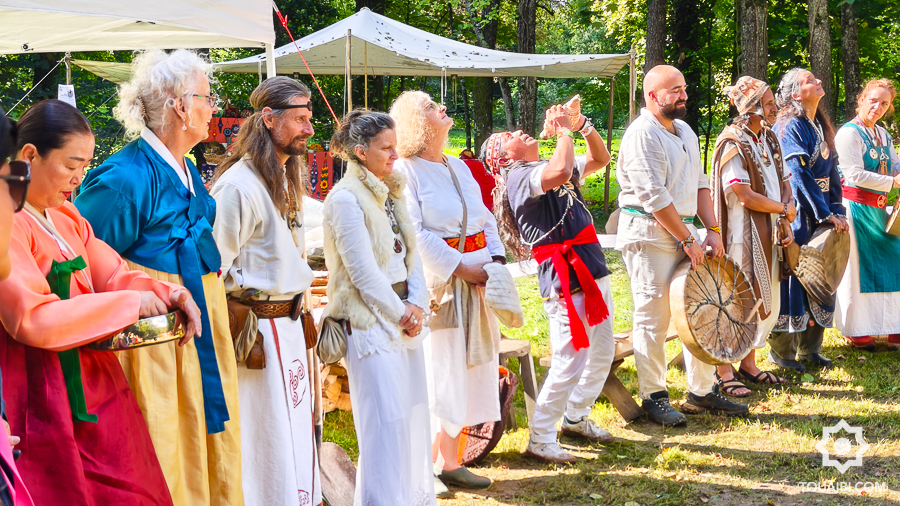
Colette, a shaman-Mudang recognised by the Mountain Clan of South Korea, is the bearer of the teachings of the 13 Original Mothers. Together with Philippe, they share this wisdom through their activities, creating a bridge between ancient Korean tradition and contemporary spiritual exploration.
About
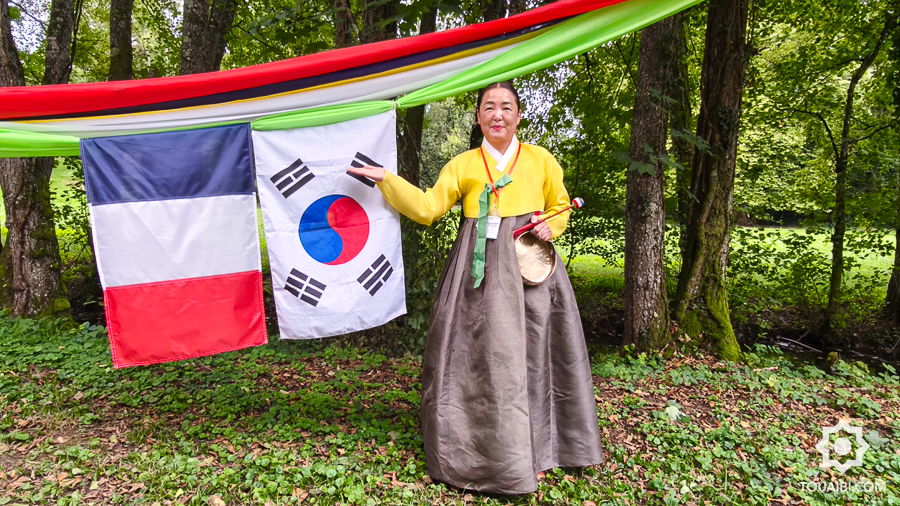
Inauguration of the 3rd Festival of Ancestral and Shamanic Traditions ‘Gai Rire Ensemble’ (Laughing Together), on 13 September 2025 in Mont-sous-Vaudrey. The opening ceremony brought together around a hundred people around the Sacred Fire, the beating heart of this event dedicated to the wisdom of Medicine Men and Women.
About
Sung-Mi Park, une Mudang (chamane) de Corée du Sud nommée par les Esprits de la Montagne.
Elle a participé au Festival « Gai Rire Ensemble » dans le Jura.
Elle est la fille de la célèbre chamane Kim Kum-Hwa, nommée Trésor Humain Vivant par son gouvernement. La voie de la Mudang est une lignée qui se transmet de mère en fille.
Sung-Mi Park, a Mudang (shaman) from South Korea appointed by the Mountain Spirits.
She took part in the "Gai Rire Ensemble" Festival in the Jura.
She is the daughter of the famous shaman Kim Kum-Hwa, named a Living Human Treasure by her government. The path of the Mudang is a lineage passed down from mother to daughter.
About
Celebration with Rufino Turpo, an Andean priest from the Turpo lineage, guardians of the sacred mountain Ausangate (Peru).
Each offering he makes is an act of reciprocity with Mother Earth, to honour and preserve the balance of the world.

Photos © Catherine Touaibi